Every clean we do starts with water so pure there is nothing dissolved in it at all. No detergents, no chemicals, no minerals. Here is why that one detail is the difference between glass that gleams for weeks and glass that spots the moment it dries.
Tamworth's water is the problem
Like most of the Midlands, Tamworth sits in a hard-water area. That means the water coming out of your tap carries a load of dissolved minerals, mostly calcium and magnesium, picked up on its way through the ground. You have seen the evidence on your kettle and your shower screen: white, chalky limescale.
Now think about what happens when a traditional window cleaner washes your glass with tap water. The water dries, the minerals stay behind, and every droplet leaves a faint white ring. That is where spots and streaks come from. It is not dirt. It is the water itself.
What "pure" actually means
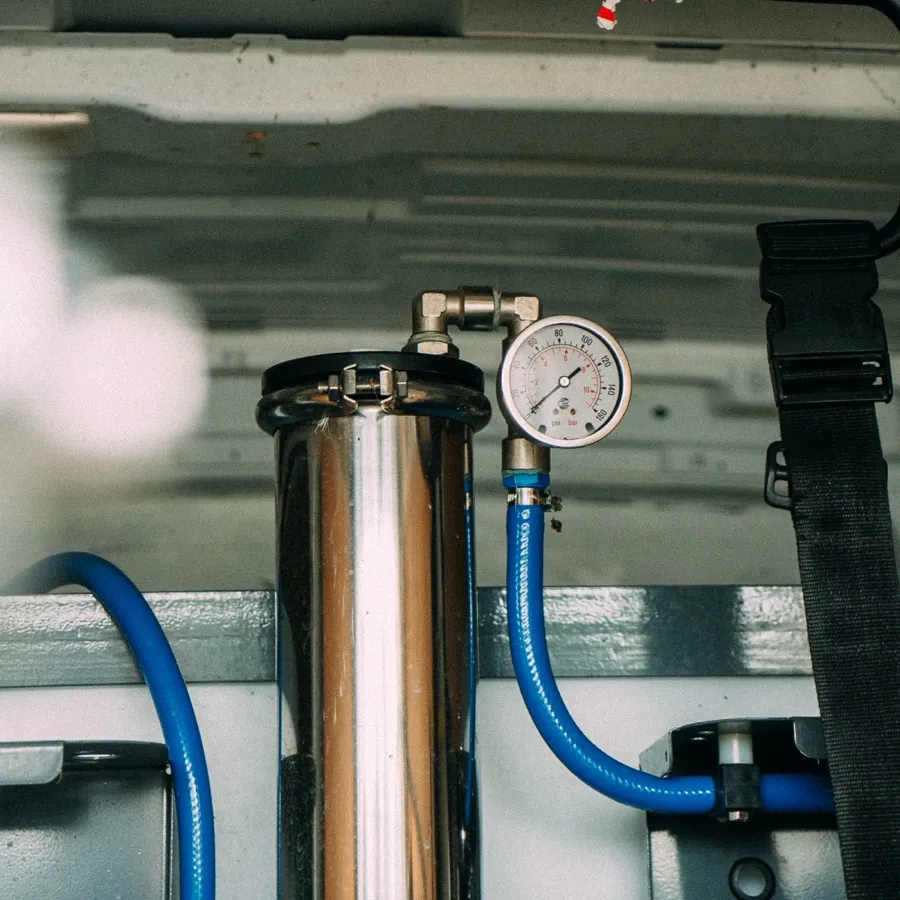
Water purity is measured in TDS: total dissolved solids, counted in parts per million. Tamworth tap water typically measures well into the hundreds. The water in our vans measures 000 ppm. Zero. We run it through a filtration system that strips out everything, and there is a gauge on the tank so we can check it is holding at zero before the first window of the day.
Pure water at 000 ppm behaves differently. Because it contains nothing, it wants to dissolve everything it touches, which makes it a naturally aggressive cleaner. It pulls dirt, traffic film and old detergent residue off glass without any chemicals. And when it dries, it leaves nothing behind, because there is nothing in it to leave.
The pole, the brush, and why we never need a ladder
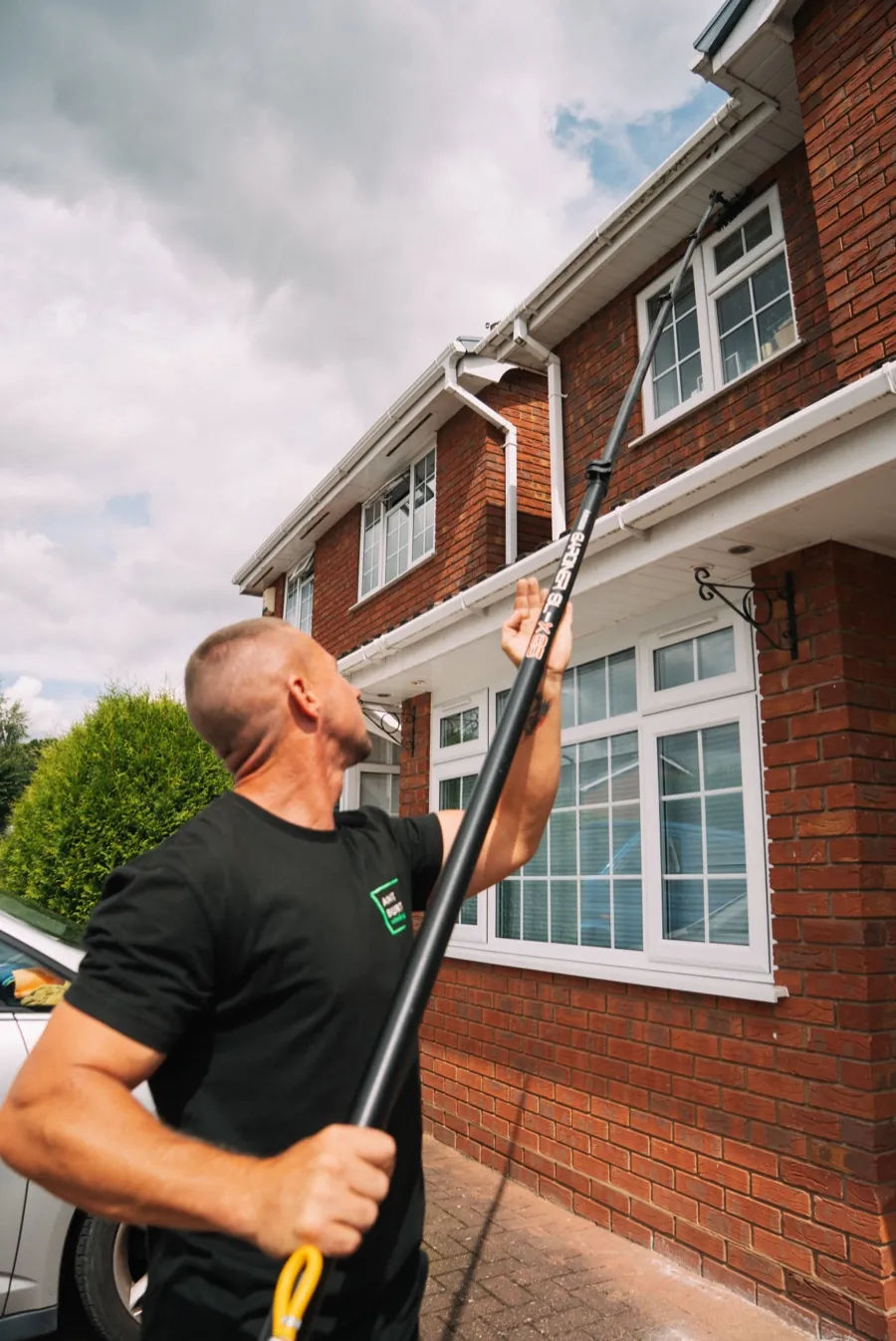
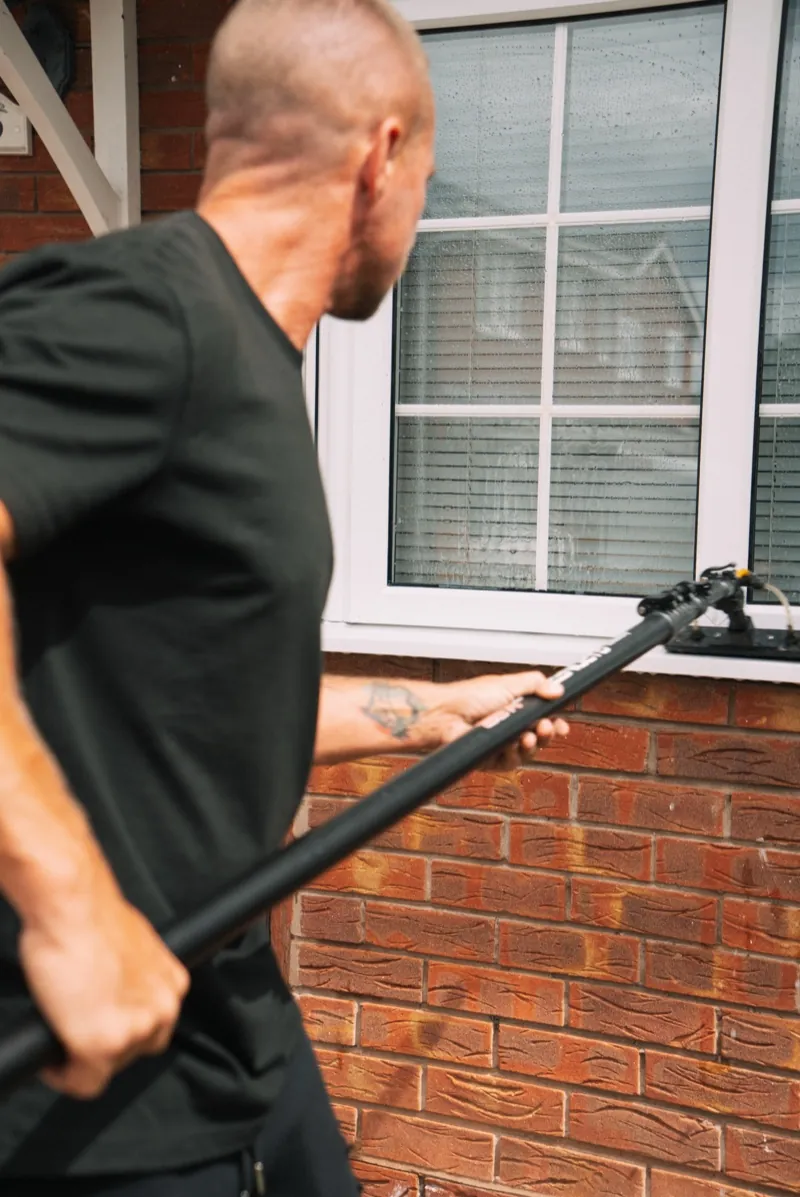
The pure water is fed up a telescopic pole to a soft brush head. The brush agitates the dirt loose, the water flushes it away, and a final rinse of pure water is left to dry naturally on the glass. That is the whole trick.
Working from the ground matters more than people think:
- No ladders against your gutters or walls. Nothing leaning on the house, nothing to slip.
- Nobody at your upstairs windows. The pole reaches, we stay on the drive.
- Frames, sills and doors get done every visit, because the brush cleans the whole window, not just the glass.
- Safe for plants, pets and paintwork. It is only water, just cleaner than anything that has ever come out of your tap.
"But doesn't rain make it dirty again?"
This is the question we get most on the round, and the answer surprises people: rain is surprisingly clean. The spots you see on windows after a shower are not the rain. They are dirt that was already sitting on the glass, moved around and re-deposited by the raindrops.
Once your windows have been cleaned with pure water there is no dirt film and no sticky detergent residue for rain to disturb. Rain lands, runs off, and dries clear. It is why we clean in most weather, and why regular customers notice their windows stay cleaner for longer between visits.
Conservatories, solar panels and the awkward stuff
The same system handles the jobs a bucket never could. Conservatory roofs come up bright again from £40. Solar panels, which lose efficiency under a layer of grime, rinse spotless with pure water and a soft brush, with no risk of scratching. Skylights, gable-end windows, glass balustrades: if the pole can reach it, it gets the same clean.
What it costs in Tamworth
Regular pure water cleans start at £15 a visit for a 2 to 3 bedroom home on a monthly round, with frames, sills and doors included every time. The full price list is public on the prices page, nothing hidden behind a phone call. Payment collects automatically by Direct Debit after each clean, and you will get a text the night before every visit.
The same system does commercial work too. If you run a shop, an office or a showroom, have a read of how we clean the glass at Polesworth Garage.
The round covers 27 areas in and around Tamworth, from Amington and Wilnecote to Polesworth, Fazeley and Kingsbury. You can check the full list of areas, see everything we clean on the services page, or request a free quote and Ant will usually come back with a fixed price the same day.